Matching Coding Agent Harnesses to Task Types
Harness architecture, not model scores, determines whether coding agents finish tasks efficiently.
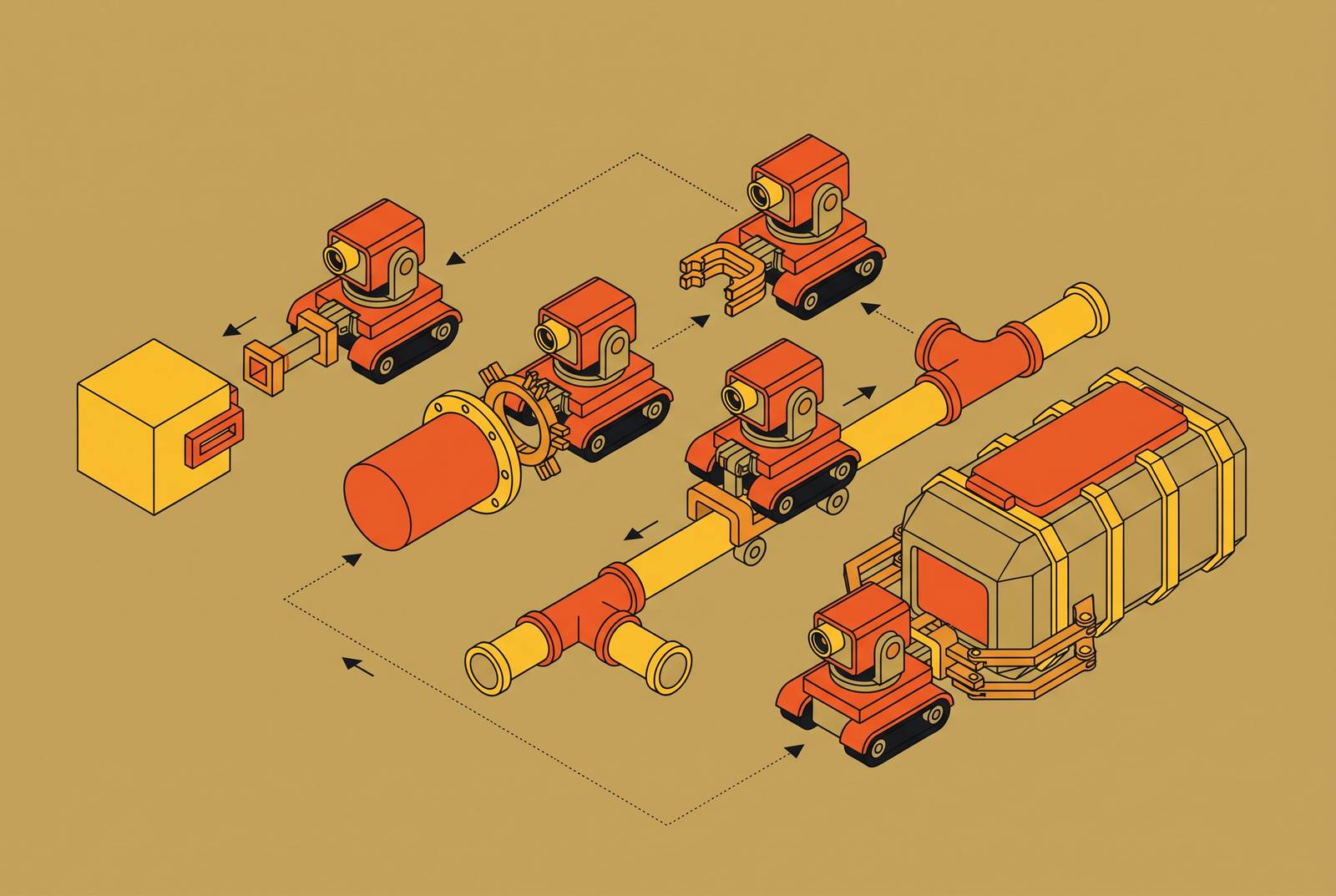
Matching coding agent harnesses to task types means choosing the execution architecture that fits the work. A multi-harness cloud coding agent platform needs task routing, isolated execution, and workflow integration so teams can delegate terminal-native or cloud-native agents and review their output as pull requests. Editor-native harnesses serve a different operating mode, where the developer stays present and steers the work.
Why harness architecture, not benchmark score, determines task success
Picking the highest-scoring model incorrectly treats the surrounding software as interchangeable. The harness determines which tools the model can use, how it plans, what context it retains, and when execution stops. A model-only ranking therefore cannot establish whether a particular agent will finish a task within an acceptable cost, time, or oversight budget.
The Scaffold Effect in Coding Agents held the model fixed and changed the harness, finding a dramatic difference in tokens per solved task while pass-rate differences remained within a narrow range. The study also found that characteristic failure patterns replicated across models using the same harness. That makes the harness an explanatory variable.
An Empirical Study of Harness Design for Coding Agents isolated planning, action space, and context management across 176 matched settings. Its controlled comparisons found that how much each part helped depended on what the model could do, the type of task, and the token budget. The practical selection unit is therefore the harness–model pair operating on a defined class of work.
The three harness architectures and what they are structurally built to do
Terminal-native harnesses work through the working tree, shell, and test runner. Claude Code and OpenCode are part of this family, whose agent loops and tool access let agents work across many files and steps. Their shorthand is end-to-end execution through the development environment. Within that family, Claude Code emphasizes interactive permission prompts and MCP servers, while OpenCode is model-agnostic and self-hostable.
Editor-native harnesses put collaboration inside the IDE. Cursor combines agent mode and tab autocomplete on the same surface, giving the developer a place to inspect, redirect, and apply changes during execution. Its shorthand is iteration with the developer present. The architecture favors a short path between a suggestion and the next decision.
Cloud-native harnesses separate delegation from execution and return results for review. OpenAI Codex provisions short-lived cloud VMs, clones the repository, and runs tasks asynchronously. Its shorthand is delegated work returned as a pull request. Persistent memory and multi-day automations extend that model beyond a single sitting, while local/worktree mode provides separate working directories for parallel tasks.
These families describe operating modes. The distinction is where execution happens, when the developer participates, and how completed work returns.
How harness components behave differently depending on the task being run
The harness design study used controlled ablations. It kept the execution loop fixed while varying individual components, allowing their effects to be separated. Planning helped weaker models improve accuracy, but primarily saved cost for stronger models with little accuracy change. Its value was conditional on model capability. Planning changed where trajectories stopped, with little change in how models behaved during execution.
Action space affected the granularity of code production. Predefined tools helped models with weaker bash proficiency, while bash-capable models worked effectively through a bash-only interface at substantially lower cost, especially on command-line-centric tasks. More tools were not automatically an advantage. Their usefulness depended on whether they supplied capabilities the model could not reliably exercise through the shell.
Context management became more valuable as the context-window budget tightened. Most of its benefit came from preventing overflow failures. Staging rule-based elision before LLM-based summarization provided the strongest efficiency, while making elided content recoverable added machinery models rarely used without improving accuracy. Long execution trajectories are consequently more sensitive to context management than short, bounded edits.
The AIDev dataset study adds task-level evidence to those component findings. Documentation had a meaningfully higher pull request acceptance rate than new-feature work, with a gap larger than typical differences between agents within many task categories. Unlike the ablations, this is evidence about outcomes by task category.
Matching terminal-native harnesses to tasks that require deep, autonomous execution
Terminal-native harnesses suit work that needs sustained access to files, commands, and tests without frequent human course corrections. Autonomous refactoring, large-scale migrations, and complex debugging fit that pattern. The agent needs room to follow a multi-step trajectory. Shell access, file editing, test execution, and subagent coordination help agents do that work more directly than an interface built around a developer stepping in again and again.
Claude Code has those tools in its end-to-end tool set and orchestration features. Its heavier token use is tied to reading more files and planning before writing. That depth has an economic trade-off. On identical tasks it uses significantly more tokens than Codex, making extensive preparation useful when thoroughness determines correctness but costly when the assignment is narrow and bounded.
The AIDev study found that Claude Code led the documentation category with a 92.3% acceptance rate. Documentation is a useful qualification to the long-horizon rule because narrow scope and visible review criteria can also suit front-loaded context gathering. The result does not establish that every documentation edit needs a deep terminal workflow.
OpenCode offers a different choice within the same family. It is free, model-agnostic, and self-hostable, fitting teams that want terminal-depth execution without vendor lock-in and are willing to supply and evaluate their own model. Output quality depends on that model choice.
Matching editor-native harnesses to tasks that require fast, iterative collaboration
Editor-native routing begins with a different condition. Human steering must improve the task while it is underway. Inline feature iteration, exploratory refactoring, and real-time debugging meet that condition when requirements or judgments emerge during implementation. Cursor’s shared surface for agent mode and autocomplete keeps those decisions close to the code.
The distinction is not simply task size. A bounded cross-file change can still require the developer to inspect each edit before the next one begins. Conversely, an extensive but clearly specified assignment may need little intervention once delegated. Editor-native execution fits the former because the developer’s feedback is part of the working loop.
Cursor also supports native routing across Anthropic, OpenAI, Google, and xAI models. Teams can change the underlying model without changing the harness, separating model selection from the collaboration surface. This lets teams test models again as what they can do changes. It does not change the central routing criterion, which remains whether a developer should participate during execution.
For unattended tasks, the operating requirement shifts. Cloud-native execution is a closer fit for background tasks that run in parallel and work expected to come back directly as pull requests. The boundary is developer-present collaboration versus developer-absent delegation.
Matching cloud-native harnesses to tasks that run in the background and return pull requests
Cloud-native harnesses fit well-scoped work that can proceed without a developer watching. Scheduled maintenance, dependency updates, and isolated bug-fix backlogs fit asynchronous queues because each task can come back for review when it is done. Developer attention moves to the handoff and review. The harness is responsible for maintaining the intervening execution trajectory.
The pull request is a structural output contract. It gives delegated work a reviewable result and supports attribution between an assignment and its outcome. That is especially useful when many tasks run in parallel. Codex’s short-lived cloud VMs provide separate task environments, while its local/worktree mode separates working directories for queued work. That separation does not eliminate merge conflicts when changes are integrated.
Persistent memory and multi-day automations let work carry on for more than a single session. Codex also maintains agent state across cloud, IDE, browser, and CLI surfaces, allowing task continuity across those interfaces.
Linear illustrates a related background workflow through agent-assisted PR review, leaning on Codex while retaining human final approval. The agent performs a repeatable review task without making the final acceptance decision. This separates automated effort from engineering accountability and leads directly to the question of how a team coordinates multiple harnesses.
How real engineering teams route tasks across multiple harnesses
The documented multi-harness pattern assigns daily IDE feature work to Cursor or similar editor-native tools, hard delegated refactors and debugging to Claude Code, and scheduled or multi-day automation and parallel PR generation to Codex. Each tool occupies a different place in the work cycle because its architecture supports a different relationship between the agent and the engineer.
Ramp’s Inspect shows how a team runs agents in the cloud. The agent is responsible for a large and growing share of merged PRs, and Cloudflare Durable Objects maintain conversation context and development session state across interactions. The relevant architectural feature is consistent state during delegated work. It supports the cloud-native operating pattern without establishing that all engineering activity belongs in that mode.
Linear’s review workflow illustrates a narrower routing rule. A specific, repeatable background task goes to an agent, while an engineer retains the final approval. This is task specialization rather than wholesale replacement of the existing workflow.
These examples locate the team-owned layer around the reasoning engine. Context, permissions, orchestration, tool access, verification, and execution environments determine how delegated work proceeds, while frontier model providers supply model capability. Harness-agnosticism gives teams room to route across operating modes instead of forcing every assignment through one interface.
Why task routing only works when each agent run happens in a properly isolated environment
A suitable harness can still fail in an unsuitable environment. Parallel agents need separate task state, dependencies, and permissions so that package installation, service execution, browser use, and verification do not interfere with other runs. Isolation is part of reliable task execution.
Claude Code can issue shell commands, install packages, and run tests, so placing several runs in a shared environment exposes them to each other’s changes. A separate working directory addresses only part of the problem. Dependency isolation and permission enforcement are also necessary for independent execution.
Codex’s cloud architecture already provisions short-lived VMs per task. Teams moving terminal-native harnesses into cloud execution need to set up the same level of isolation themselves, since they cannot assume the harness supplies it. The execution environment must support the operations the task requires.
For reliable engineering work, that environment also needs functional equivalence to a local developer machine. The team’s dependencies, tooling, and access need to be available, rather than forcing every run to build its environment from a minimal container. Harness selection and environment provisioning are therefore coupled decisions.
Building a task-routing decision that integrates into existing workflows
To turn this framework into an operating model, teams should route work from Slack, Linear, and GitHub rather than requiring a separate delegation interface. The request to trigger Claude Code or Codex from Slack and receive a pull request joins workflow integration with execution and delivery. It is not just a model-selection feature. A multi-harness cloud coding agent platform needs to connect that entry point to the chosen harness and a suitable isolated environment.
Work that needs a developer’s judgment as it proceeds belongs in a developer-present workflow, while deep autonomous execution and bounded background assignments each need the delegation mode that fits them. Environment provisioning must then match the required tools, dependencies, and access.
Ticket quality strengthens the handoff before execution begins. Linear encourages clear tickets with linked code, acceptance criteria, and edge cases, so how teams write issues directly shapes what the agent produces. An assignment that spells out what is needed gives an unattended agent a clearer target. It also gives the reviewer explicit criteria for evaluating the returned work.
Attribution closes the routing loop. Teams need to connect each outcome to the harness, model, and task type, then evaluate cost per resolved task, time-to-completion, and oversight burden. As harnesses and models ship updates, repeating internal benchmarks makes those decisions revisable.