Self-Hosted Agent Runners Scored Against Managed Cloud Platforms on the Infrastructure Metrics That Cloud Engineers Actually Own
Managed, hybrid, and self-hosted agent runners compared across six infrastructure dimensions.

A bring-your-own API key cloud coding agent runner must be judged by who owns the infrastructure as well as who owns the key. The decisive comparison is between fully managed, vendor-runner hybrid, and fully self-hosted deployments across isolation, blast radius, compliance posture, ops burden, scaling behavior, and audit surface.
What engineers are actually deciding when they choose where agents run
The infrastructure decision determines who controls the sandbox, patches it, pays for idle capacity, and signs the compliance attestation. These responsibilities do not necessarily sit with one party. A team can own the machine executing commands while a vendor owns the system deciding which commands to issue. That distinction separates ownership of execution from ownership of the agent.
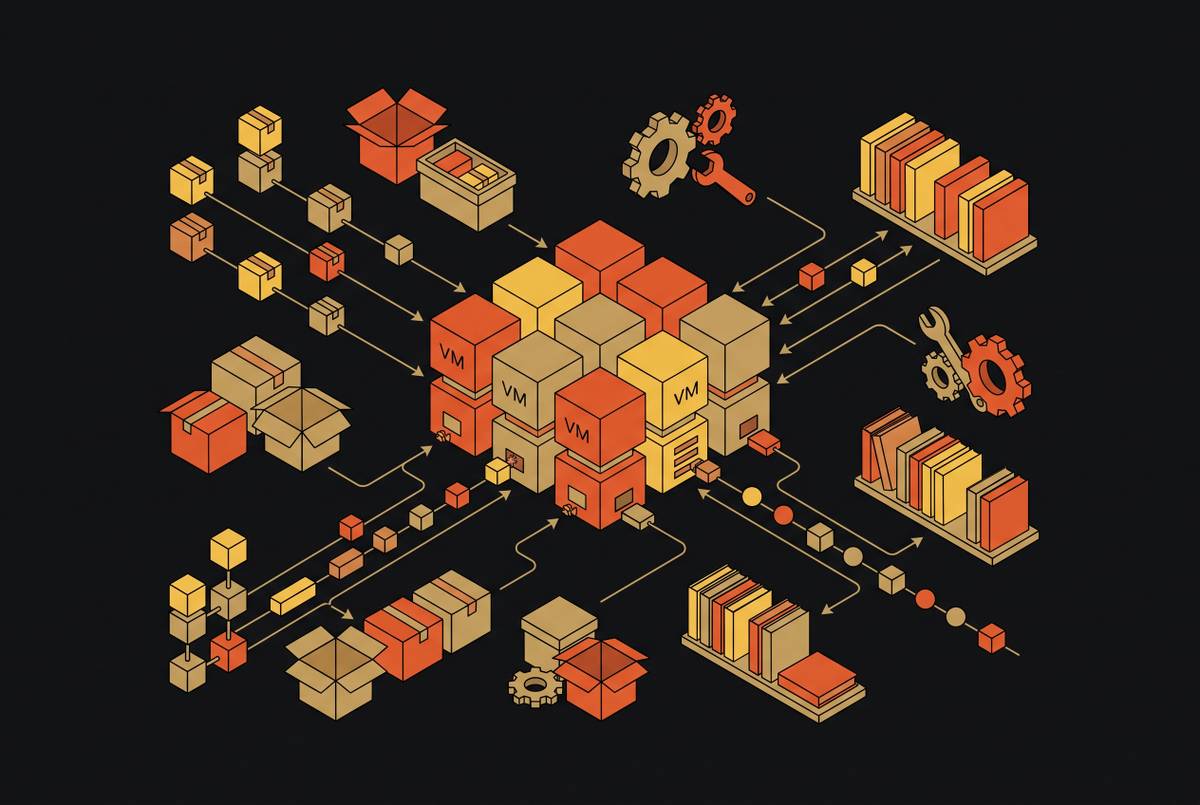
Fully managed platforms operate the control plane, sandboxes, and servers, leaving the customer with a workspace. Vendor-runner hybrids retain the agent loop, inference, and orchestration on vendor infrastructure while customer machines execute tool calls. Fully self-hosted deployments place every layer, from control plane to sandbox, under customer control. The hybrid is a distinct architecture. Its local execution boundary coexists with a vendor connection used for orchestration and inference.
The six infrastructure dimensions that separate the models in practice
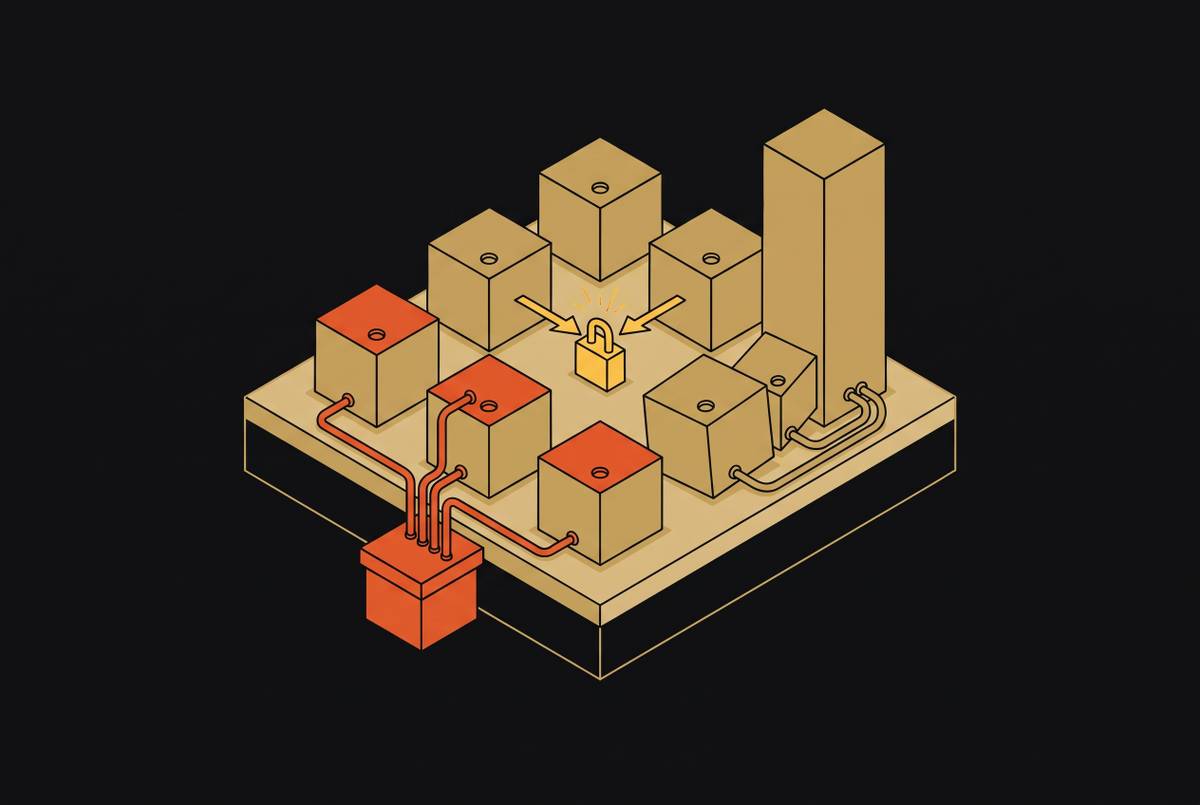
Isolation measures the boundary between agent workloads and between an agent and its host. Because agents run model-generated commands, that boundary limits whether prompt injection or a runaway task can reach other workloads. Blast radius measures what a compromised or misbehaving session can touch through network access, secrets, repository permissions, and service credentials. These dimensions answer different questions. A strongly isolated sandbox can still hold credentials with broad reach.
Compliance posture measures whether the architecture can meet data residency, audit, and certification requirements, which takes more than a certificate held by the vendor. A vendor's SOC 2 does not give a customer's auditor access to every infrastructure layer. Ops burden measures the engineering work required to keep those layers healthy, including patching, secrets rotation, scaling, and incident response. Ownership determines where that work lands.
Scaling behavior describes how capacity handles steady demand and spikes, including what provisioned machines cost when they sit idle. Managed capacity removes customer provisioning decisions, while customer-owned capacity requires them. Audit surface describes which evidence exists, who can access it, and where it resides. The evidence includes pull requests, session recordings, tool call logs, and egress records. The evidence must reside where the customer can assemble it into a self-contained audit.
How fully managed platforms score on each dimension
Fully managed platforms score strongest on low ops burden and accommodating variable demand. The vendor owns patching, capacity, and sandbox lifecycle, so the team does not maintain runner infrastructure. The platform also handles secrets management for the infrastructure, though customers still choose which credentials to grant. This is a substantial operational advantage. Parallel workloads do not require the customer to provision additional machines.
Isolation is also a strength, though the vendor controls how it works. Claude Code on the web and Cursor cloud agents run sessions in isolated VMs. Codex Cloud runs each task in its own isolated container that the vendor manages. By default, those boundaries keep execution inside the vendor sandbox. Customers nevertheless depend on the vendor to substantiate their strength, rather than inspecting and operating the boundary themselves.
Blast radius depends on permissions beyond the sandbox. A managed agent with write access to a production repository has the same credential-based reach as a self-hosted agent with identical access. Moving execution to a managed platform does not narrow those permissions. Conversely, customer ownership of the host does not make broad permissions safe. The relevant distinction is what the session can change.
Compliance posture and audit surface are the weaker columns. A managed environment depends on vendor certifications and contractual commitments, and autonomous commits to production repositories require additional controls within ISO 27001, SOC 2, HIPAA, or PCI-DSS frameworks. Compliance work then focuses more on reviewing the vendor and negotiating the contract. Evidence remains another dependency. Pull requests and some session recordings may be available, but tool call logs and egress records are not in a customer-controlled SIEM by default.
How vendor-runner hybrids split the scorecard
With vendor-runner hybrids, customers control execution isolation and local access, while the vendor keeps control of the rest of the agent system. Customer-controlled containers or VMs can run inside the customer's network. This supports access to restricted resources without moving execution outside the perimeter. The boundary remains partial, however. Tool results can still cross it for inference, so local execution does not establish complete data residency.
Cursor's architecture documentation describes repositories, build caches, secrets, and tool execution remaining in the customer environment, while tool call results return over an outbound HTTPS connection for subsequent inference. Orchestration, inference, and planning remain in Cursor's cloud. That split improves control over local resources. It also leaves a live data channel to the vendor, which must be included in the compliance assessment. A regulated team cannot treat “self-hosted workers” as proof that all agent data stays local.
Devin Outposts follows the same pattern, with session machines on customer infrastructure and the agent's inference and planning in Cognition's cloud. Claude self-hosted environments also send sessions to customer-managed runners, while queueing, session scheduling, and the claude.ai interface stay in Anthropic's cloud. The orchestration layer is not eligible for Zero Data Retention or a HIPAA BAA. Product distinctions are therefore consequential. Anthropic's newer self-hosted Claude Managed Agents product, launched November 12, 2026, instead follows the fully self-hosted model.
Ops burden is split rather than removed because customers maintain the execution environment while vendors operate the agent loop. Cursor's September 2026 update adds dynamically scheduled team pools, Kubernetes operator support, and Cloud Run autoscaling, giving worker capacity a model comparable to CI/CD runner autoscaling. Audit control improves, but remains divided. Cursor's documentation says administrators can block artifact uploads, preventing those artifacts from appearing in pull requests or the dashboard. That restriction does not stop tool calls, so it cannot be treated as a general block on the agent's data channel.
How fully self-hosted deployments score, and when the cost clears
Fully self-hosted deployments provide the strongest position on compliance posture and audit surface because the customer controls every layer. Data residency becomes an enforceable infrastructure property. Tool execution, files, and egress remain within the customer's VPC or on-premises network. The auditor can inspect the complete stack. When policy enforces network egress and there is no live vendor endpoint, blast radius can stay within infrastructure the customer controls.
Isolation still depends on the boundary the customer implements. Full ownership grants control over that boundary while leaving the customer responsible for protection from weak configuration or broad credentials. The same distinction applies to evidence. Every log, artifact, and egress record can reside in customer-controlled infrastructure and feed directly into the customer's SIEM and audit tooling. This removes the vendor-hosted evidence boundary, but the customer still has to maintain the controls that produce records for audits.
That ownership creates the highest ops burden. The team runs the control plane, sandbox lifecycle, patching, secrets rotation, scaling, and incident response. None of those responsibilities disappears after deployment. Provisioned capacity also incurs idle cost during workload troughs, making spiky or light usage a poor economic fit once operational overhead is included. Steady, high utilization is the condition under which provisioned hardware becomes economically rational.
The cost comparison is illustrative. A modeled comparison places a managed agent task at a small fraction of the cost of equivalent work on an eight-H200 self-hosted cluster, before storage and operations enter the budget. That estimate reflects specific workload assumptions. It shows how much more ownership could cost, but does not give a break-even point that applies to every team. A compliance rule prohibiting code and prompts from leaving the network is therefore a stronger justification for full self-hosting than an assumed saving.
Reading the scorecard: which model fits which compliance and workload profile
The decision path starts with the data boundary. If code, prompts, or model traces must always stay inside the network the team controls, full self-hosting may be required even with its cost and the work it takes to run. A platform's convenience cannot compensate for an architecture that crosses a prohibited boundary. Nor does a vendor certificate change where inference occurs.
If execution and file contents must stay inside the network but orchestration and inference may cross a vendor boundary, a vendor-runner hybrid is the appropriate model. Cursor self-hosted workers, Devin Outposts, and Claude self-hosted environments fit that architectural category. The qualification is important. Tool outputs sent for inference must remain compatible with the team's data rules, so keeping files local alone does not ensure compliance with residency requirements. Many rules said to require full self-hosting only require customer-controlled execution.
If both execution and the relevant data may cross the boundary, the second gate is utilization and operational capacity. Spiky or uncertain demand, no inference team, and no on-call obligation for runner infrastructure favor managed platforms on cost and ops burden. Steady, high utilization changes that calculation. With an existing platform team that already owns equivalent infrastructure, self-hosted or bring-your-own-cloud deployment becomes economically rational. BYOC also fits teams that need sandbox infrastructure in their own cloud without owning the full control plane.
BYOK is a separate procurement decision. A customer's API key does not by itself answer who operates the sandbox, where tool results travel, or which audit records are exportable. The named managed services establish cloud execution options, but their isolation descriptions do not establish support for a customer's Anthropic or another model provider's key. Those are separate product capabilities.
The governance layer that sits above the deployment model
Deployment topology cannot make agent work auditable by itself. The strongest governance controls are the pull request as the unit of review, runner-level credential scoping, session evidence, and audit logs exportable to a customer-controlled SIEM. These controls connect infrastructure ownership to accountable changes. Their presence can distinguish two deployments more sharply than whether either one is called self-hosted. Governance must be evaluated after establishing architectural fit.
The pull request provides a reviewable, mergeable, commentable artifact that a human can send back. It makes agent output subject to review regardless of where execution occurred. Parallel, scheduled, and event-driven workflows make this checkpoint more important because each autonomous session adds another audit entry. A platform that does not produce a reviewable artifact per session makes compliance harder.
Credential scoping limits what that session can change. A self-hosted runner with broad production credentials is not more secure than a managed sandbox with narrowly scoped credentials. Network location alone is insufficient protection. All three models still need runner-level secret and credential scope as part of governance. It constrains the permissions through which an otherwise isolated agent can affect repositories and services.
Audit portability completes the evidence chain. Session recordings, tool call records, and egress records must be evaluated for export to the customer's SIEM. This is a concrete vendor-evaluation requirement, including when the vendor operates only part of the architecture. A team that chooses the right deployment model but omits the governance layer has not met compliance requirements or made its answer defensible to an auditor.