What Cloud Bench Infrastructure Teams Give Up When They Bolt OpenCode or Codex Onto Existing CI Pipelines
CI pipelines lack the persistent workspaces and isolated compute agents need for long-running tasks.
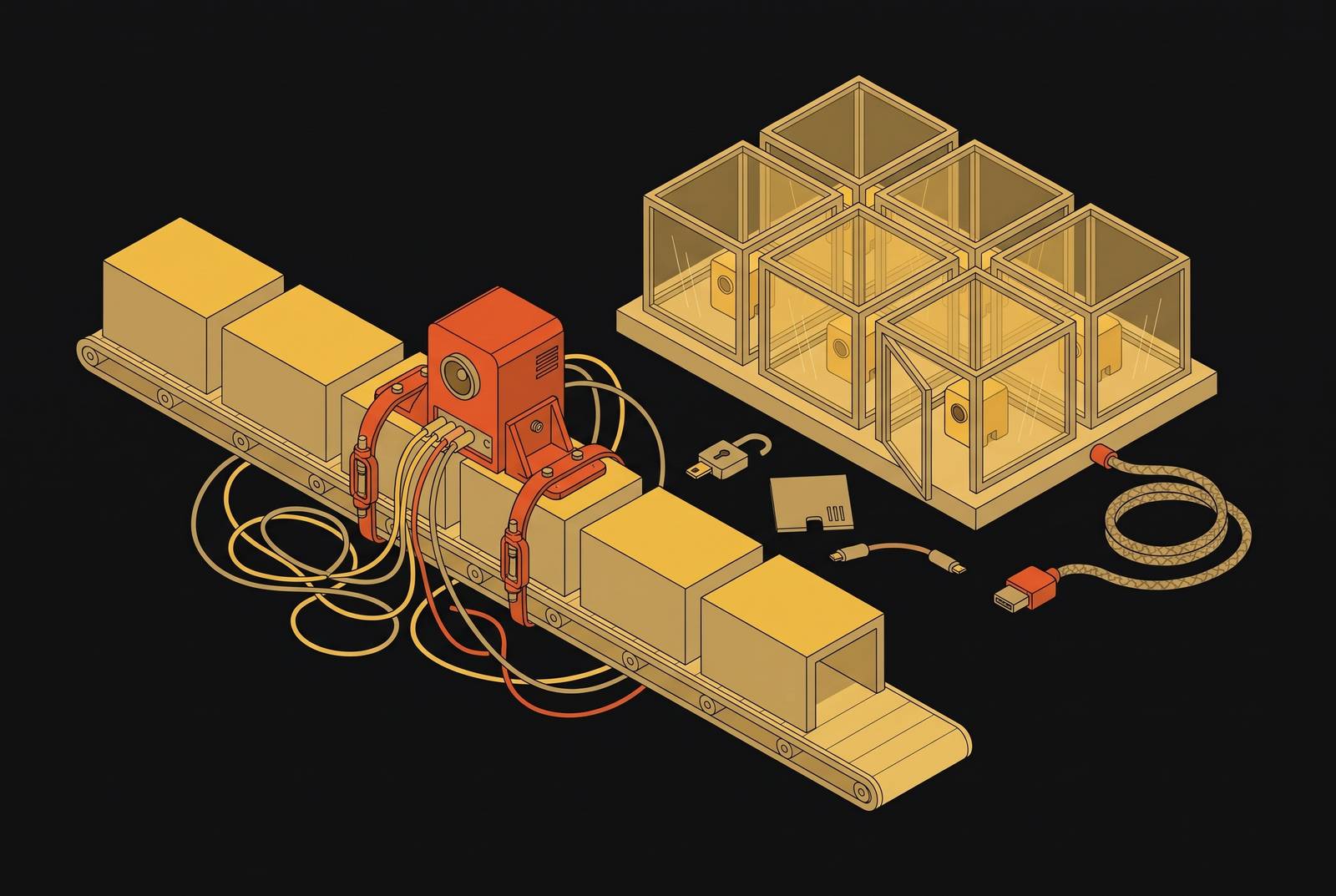
To run Claude Code in the cloud without managing infrastructure, teams need a managed agent environment with isolated compute, persistent workspaces, prepared dependencies, task-scoped credentials, and per-run attribution. Bolting OpenCode or Codex onto existing CI pipelines can launch an agent quickly, but leaves those capabilities for the team to supply. The choice turns on the workload, especially whether agents must complete long-running engineering tasks.
Why CI bolt-ons look attractive to bench infrastructure teams — and what that framing obscures
Reusing CI is a rational starting point for bench infrastructure teams. The teams already have runners, repository connections, and secret storage. Getting OpenCode into a pipeline and returning review comments can take an afternoon, so the first useful result arrives before the operational costs become visible. Running Codex through CI has the same appeal. Neither choice is inherently misguided, but the speed of that first setup says little about the environment needed for sustained agent work.
Two categories help make the distinction clear. Cloud development environments keep workspaces across sessions, while short-lived sandbox APIs bound execution but may not keep the working environment. A CI job follows the short-lived model, starting clean and exiting when its work finishes. That lifecycle suits deterministic scripts better than an agent that must inspect a repository, edit files, install packages, and keep testing for an hour or more.
A coding agent needs to verify its changes against the environment in which they will run. For bench infrastructure work, that can include services, integration tests, and previews. Isolation, unattended operation, scoped secrets, and persistence across interruptions therefore become requirements of the task itself.
What OpenCode on GitLab CI actually requires teams to supply themselves
OpenCode’s GitLab approach has a genuine access-control advantage. It runs on the team’s runners without requiring persistent repository access for a third-party SaaS intermediary. That also avoids dependence on an intermediary’s support for particular repository hosts. The boundary is narrower than keeping code entirely inside the organization, however, because code still goes to the model provider’s API for inference. Repository control does not remove the external inference connection.
OpenCode’s documented GitLab Duo flow makes the operational work explicit. Each job installs opencode-ai and glab, writes auth.json from secrets, configures git identity, and authenticates glab before running the agent. The job then detects changes, creates a branch, commits, pushes, and opens a merge request. All of that happens within one pipeline job. The team supplies both the agent’s starting conditions and the machinery that turns its edits into a reviewable result.
The community-created nagyv/gitlab-opencode component reduces that boilerplate, but does not replace the execution model. OpenCode still starts in a fresh container without a persistent workspace or memory of prior turns. Authentication uses a masked CI/CD File variable named OPENCODE_AUTH_JSON. That is a workable mechanism, while credential rotation, scope management, and secret hygiene remain the team’s responsibility.
The environment isolation that Codex cloud tasks provide and that CI bolt-ons cannot replicate
OpenAI’s Codex cloud flow, relaunched on September 29, 2026, separates environment preparation from task execution. A user publishes a reusable environment, and each task starts from that prepared filesystem in its own isolated workspace. Tasks can run in parallel while the laptop is closed. A plain API-key CI configuration comes without this workspace architecture or the compute that goes with it. Running the same agent through a pipeline is therefore not equivalent to running a cloud task.
OpenAI’s plan specifications make that distinction concrete. Plus cloud tasks receive 2 vCPUs, 8 GiB memory, and 8 GiB disk, while Pro, Business, and Enterprise tasks receive 4 vCPUs, 16 GiB, and 32 GiB. Those resources do not come with the API-key path. Plus or Pro teams using an API key get the CLI, SDK, and IDE extension at API rates, but no cloud features through that configuration. Access tokens for CI are a Business and Enterprise feature.
The execution boundary is a separate consideration from entitlement. Standard containers share the host kernel, while microVMs have a stronger isolation boundary. That distinction becomes consequential when an agent executes model-generated commands. A standard CI container does not automatically provide the full combination of isolation, resource limits, network controls, permission scoping, and monitoring needed for production agent sandboxing. To get those protections, the team needs more infrastructure than another pipeline configuration entry can supply.
What persistent state means for long-running agent tasks, and what CI jobs lose when they exit
Codex cloud tasks retain recoverable VM state for up to seven days after the last turn. Follow-up work can therefore resume from the saved environment. That persistence is absent from a plain API-key CI configuration. For bench infrastructure teams handling complex, multi-file changes, the distinction affects both startup convenience and the continuity of the task. Files, installed packages, and branches are part of the agent’s working state.
Long-horizon work can exceed a session’s context length, while increasingly bloated context can impair effectiveness. Compaction truncates or summarizes that context, and memory-based approaches store information for a new session. CI provides neither mechanism by itself. Preserving a workspace and preserving useful task context are separate requirements, and a pipeline does not satisfy either merely by retaining a record of job execution.
Interruptions make the lifecycle mismatch especially clear. A persistent environment keeps the working setup available across pauses and restarts, while unattended execution can continue after the triggering machine goes offline. A fresh CI job instead starts without the previous job’s workspace. Without custom state storage outside the pipeline, work that takes several days must be split into single-run jobs. That may suit a bounded review, but it changes the shape of an engineering task that depends on successive rounds of investigation and verification.
How dependency management and environment configuration become the team's problem in a CI bolt-on
OpenAI’s cloud environments guide describes preparation as a reusable step. Codex inspects repositories, installs dependencies and tools, and tests the workflow before the user reviews the setup report and publishes the environment. Subsequent tasks start from that prepared filesystem. The model addresses a limitation of agents that otherwise assume their environment has already been configured.
The GitLab flow takes the per-run approach instead. Its installation and authentication steps are valid, but they recur with each fresh job rather than becoming a published starting environment. For a simple repository, that can be a reasonable tradeoff. For bench infrastructure with services, databases, test fixtures, and proprietary packages, preparation grows with the dependency graph. Running more agents and more job types multiplies that work without giving the agent a persistent understanding of the codebase.
A runner can execute the commands its configuration permits, but it does not automatically give an agent staging access, deployment capability, or preview URLs. Verification stops at the runner’s configured boundary. Agents that need integration tests against real infrastructure depend on a separate environment layer and access to it. Installing an agent does not give it the environment required to prove its changes work.
The security surface that expands when agents run in shared CI environments
Keeping third-party repository grants out of the system removes one way it is exposed to risk. It does not settle the security design. The team still has to secure inference API access, secrets the runner can use, and generated commands that run within the runner’s isolation boundary. In a shared container environment, the host kernel remains common to other workloads. Teams must weigh the security they gain from direct repository control against their responsibility for controlling what runs.
Defense-in-depth is the relevant standard for that responsibility. Isolation boundaries limit where execution can reach, while resource limits, network controls, permission scoping, and monitoring address different failure paths. None substitutes for the others. A standard container alone lacks some of those controls, so the team must add them and keep them working. This transfers security work to the team.
Credential management makes the transfer more demanding as agent use expands. The masked variable in the OpenCode flow is reasonable secret storage, but the team still owns rotation, scope limits, and audit trails. A harness-agnostic team using OpenCode for review, Codex for refactoring, and Claude Code for complex multi-file work must govern multiple authentication schemes and permission profiles. Credentials should be injected at runtime and scoped to the task. Without a unified control plane, the team must build support for that policy into each agent, pipeline, and integration.
Why observability and attribution break down when agents run inside CI pipelines
CI reports whether a job passed or failed. That signal is useful, but it does not explain which agent, model, credential, or task produced a particular engineering outcome. Pipeline logs are not the same as per-run attribution. To measure agent work, teams need to know the source, harness, model, and credential behind every minute of execution. Those dimensions connect agent activity to output and cost rather than merely to a successful pipeline invocation.
Gitmore lists AI coding agent attribution for Claude Code, GitHub Copilot, Cursor, Codex, and Devin as a feature. A pipeline can show that a pull request was opened without establishing whether its changes survived review or required substantial rework. PR volume is therefore an unreliable proxy for delivered value. Regressions, rollback, and re-review can cost people time and effort that a job-pass metric misses.
Delivery lead time, deployment frequency, change failure rate, code churn, and output per unit of real effort all need to account for agent contributions. Attribution makes that connection possible at the agent level. Without it, a team cannot reliably tell whether an agent got work done or left reviewers with more work. The gap is not a defect in CI reporting, but a consequence of asking job-level signals to explain agent-level work.
How do teams run coding agents in the cloud without managing their own infrastructure?
A well-designed managed cloud agent environment supplies the execution layer that a CI bolt-on leaves to the team. Across the five categories, its design starts with an isolated VM for each run rather than a shared container, and a workspace that survives pauses and restarts. Dependencies and tooling are prepared at the team level. Credentials arrive at runtime with task-specific scope, while analytics attribute execution to its source, harness, model, and credential. These properties require assessment even in an environment described by the word “cloud.
An agent can operate unattended and return a pull request, recording, or reply without requiring the team to adopt an interactive copilot workflow. The output fits the existing review process. For bench infrastructure teams, this helps most when the agent has to work through several files, run services, and verify changes before handing them back.
Teams should choose against the actual workload before the pipeline integration becomes a fixed commitment. A bounded review job and a long-running infrastructure task do not need the same execution model. CI can remain a practical route for the former, while the latter depends on continuity, isolation, and verification beyond a fresh runner. The decisive comparison is therefore not how quickly an agent starts, but how much infrastructure the team must own before it can trust the work that returns.