Running Browser-Driven and Service-Dependent Agent Tasks in the Cloud
Cloud platforms give AI agents the tools to verify code changes work.
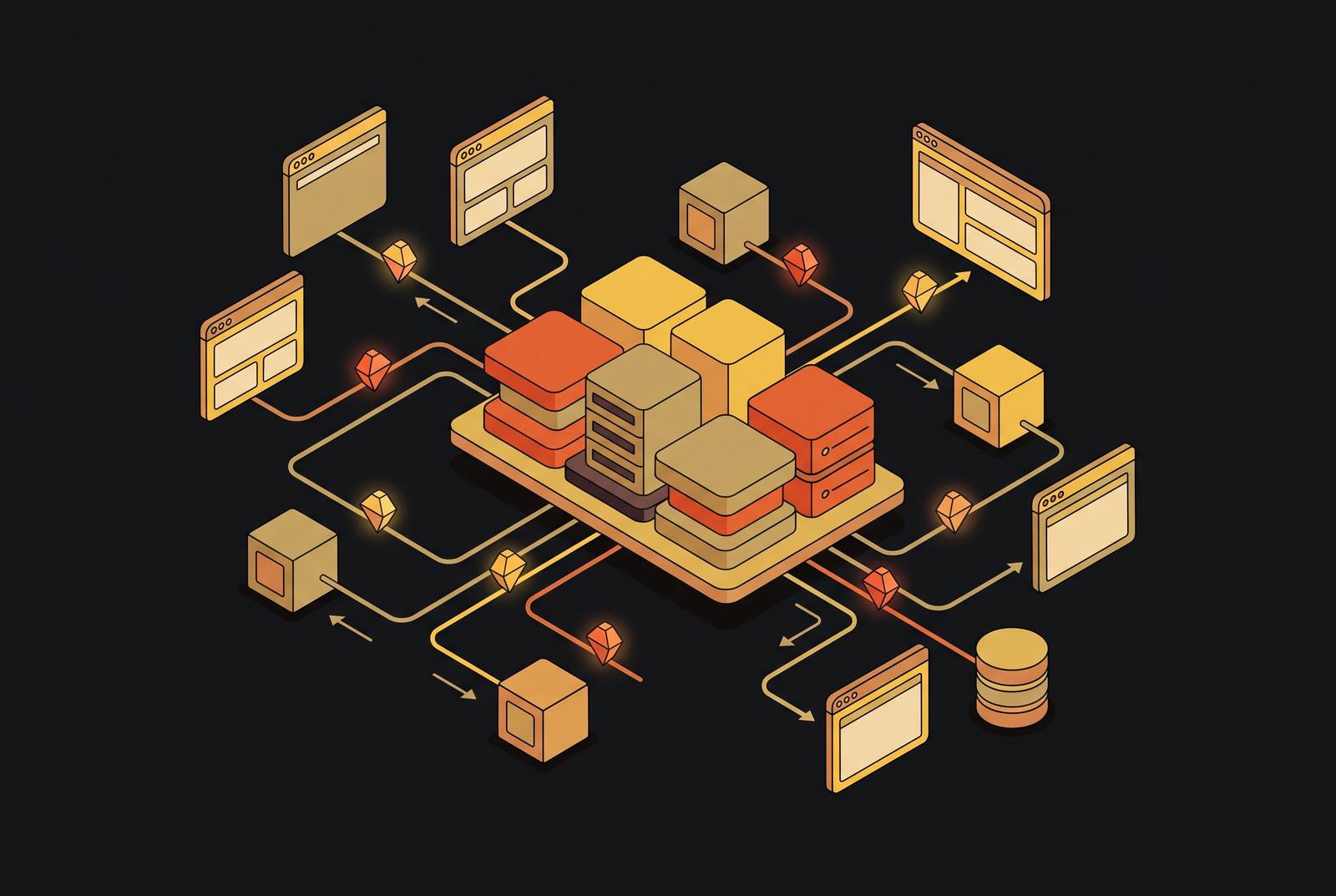
Running browser-driven and service-dependent agent tasks in the cloud requires an execution environment that can edit the code and run and verify the system being changed. Replicas offers managed cloud execution for Claude Code and Codex without teams operating the workspaces themselves. For a bring-your-own API key cloud coding agent runner, credential support is only the starting point. Whether delegated work is done depends on isolation, running services, browser access, and evidence that people can review.
Why browser and service tasks expose the limits of agent execution environments
Most coding tasks an agent handles are text transformations, including reading a file, editing it, and opening a PR. A thin, constrained environment can support those steps without exposing an obvious limitation. Browser-driven and service-dependent tasks break that assumption because their results depend on a running system. To render a UI, click through a flow, query a live database, or run a Vite dev server, the agent needs more than file access.
That distinction matters most when the agent tries to verify a change. An agent that fixes a UI bug but cannot render the page cannot confirm that the visible failure has disappeared. Static analysis and unit tests can help, but the agent still needs to see what happened. The CAT framework paper explains that many web bugs manifest only when code is rendered in a browser, making end-to-end GUI testing necessary. Without that step, the agent can report a plausible fix while leaving the central question unanswered.
The gap is therefore not simply whether an agent can produce code for a complex application. It is whether the environment lets the agent exercise the behavior that code is supposed to change. A service integration presents the same problem when its response can only be assessed against a running instance. Teams with environments that lack these tools still need a human to do the check that shows whether the changes work.
What "closing the loop" actually requires from a cloud environment
Closing the loop means giving the agent the means to act, observe the result, and decide whether the change worked. For browser and service tasks, that needs a full Linux environment with more than a container’s file-editing tools. The agent needs package installation rights because a task may reveal a dependency that was not anticipated during setup. If the environment cannot handle that dependency, it limits what the agent can finish, no matter how well the model can reason.
The environment must also support background processes and service orchestration. A dev server, database, and queue may need to run concurrently while the agent changes and tests code. Exposed ports and network access let the agent reach the service under test or the API being integrated. A browser, whether headless or full, supplies rendering, clicking, screenshots, and execution of Playwright or equivalent tools. These capabilities form a connected requirement because a browser cannot verify an application that the environment cannot start or reach.
Observation completes that requirement. Screenshots, video, and command output give the agent evidence to check whether what it did had the intended result. The computer-use agent security framework describes agents operating across browsers, desktops, filesystems, terminals, and tool backends in real software environments. Its account makes reliability a property of the whole execution setting. A cloud environment closes the loop only when it supports both the action and the feedback needed to assess it.
Why isolation is a hard requirement, not a performance feature
Those tools also let an agent do more damage when its permissions are too broad. Access to running services and live credentials in a shared or persistent environment creates risks including credential misuse, runaway billing, and cross-task contamination. An agent with raw API credentials and no strict scope limits can exhaust a cloud billing limit over a weekend on a poorly prompted task. The failure can occur before a human notices it. Better task instructions do not replace a boundary around the agent’s authority.
Shared state makes that boundary harder to maintain. Installed packages, running processes, and cached credentials from one task can carry into the next. The computer-use agent security framework identifies permission scope as a joint determinant of reliability with perception errors, planning drift, memory use, tool mediation, and runtime oversight. Unconstrained tool access is therefore an architectural flaw. The environment must limit what each task can affect independently of how well the agent follows its plan.
Each task should run in its own ephemeral VM, provisioned fresh and destroyed on completion, with credentials scoped to that task alone. In platforms such as Replicas, a fresh VM per task and destruction on completion provide the lifecycle boundary that prevents state from carrying between tasks. Isolated VMs impose infrastructure overhead, but the cost of a runaway credential or a contaminated production environment far exceeds it. For services where users submit prompts that generate code, per-task microVM isolation is increasingly a baseline safety expectation.
How browser access inside an agent VM changes what verification means
A browser inside the agent’s VM changes verification from an assertion into an observation. Without it, the agent can edit a UI component, but a human still has to render the page and click through the affected flow. With it, the agent can run the application, execute a Playwright script, capture the result, and attach evidence to the PR. The reviewer receives both the proposed change and a record of the check.
The CAT framework formalizes this approach as Code-driven Agentic Testing. The agent writes Playwright code to drive a browser, gathers textual and visual feedback, and autonomously explores the application to uncover bugs. CATJudge puts Browser-Use and Computer-Use tools in the same environment so both can be used in one session. Browser access is thus not merely a convenience for taking screenshots but a prerequisite for this verification loop.
Service-dependent work follows the same logic. An agent integrating a payment API should be able to fire a test transaction against a running instance and observe the response. Cursor’s Cloud Agents documentation describes how code changes come back with screenshots and videos of checks as evidence. Such artifacts show reviewers what the agent tested and what it observed. They help people review work faster and with more trust, though a recorded check cannot prove that every possible behavior is correct.
How cloud platforms run Claude Code, Codex, and other agents without teams managing infrastructure
Managed cloud agent offerings differ in how they provide isolation, running services, browser access, and verification artifacts. Replicas runs each task inside an isolated Linux VM pre-loaded with the team’s codebase and dependencies. Agents can install packages, run services, expose ports, use a headless browser, and observe results before opening a PR. Replicas’ backlog experiment provides evidence of verification in a running environment through REP-503, a batch of React lint fixes in which the agent started the app and checked it before opening the PR.
Cursor Cloud Agents each receive an isolated VM with a desktop. Cursor clones the repository, runs an install command, and saves a disk snapshot called a Cursor Build, from which task VMs fork live, warm copies. Agents can test their work in the desktop and record screenshots and videos. Cloud workspace repository support includes GitHub, GitLab, Bitbucket Cloud, and Azure DevOps. Tasks can begin through the editor, web, Cursor CLI, integrations, an API, or automations, connecting cloud execution to several existing entry points.
Codex cloud runs delegated repository tasks in provider-hosted environments, while the local Codex CLI is a separate execution option. Claude Code on the web runs repository tasks in an environment that the provider manages. For Codex cloud, evaluation should cover environment setup, dependencies, network requirements, and how results move into the GitHub workflow. For Claude Code on the web, it should cover repository access, environment setup, and how work moves between web and local sessions. A local harness’s capabilities do not establish what its hosted service provides.
The practical comparison is the same scoped feature or reproducible bug assigned from the same repository snapshot. Dependencies, private packages, databases, and test services must be able to run in each finalist’s task environment. Command output, tests, and browser evidence reveal more than the diff alone. Recording the human time needed to prepare each result for review also captures work that a successful-looking code change can conceal.
Matching the agent harness to browser and service task types
The environment supplies capabilities, but the harness determines how the agent uses them. Tool invocation, verification loops, and context management affect whether a task reaches a tested result. Even with a VM that can run a browser, an agent may leave the relevant flow untested. Harness selection therefore belongs in the task evaluation. Its value depends on the work being delegated.
Codex handles parallel agent fleets well, making it a fit for batches of service-integration tasks that can run concurrently in separate VMs. Opencode is model-agnostic and works with many providers through bring-your-own-key, with native LSP integration and parallel sessions. That suits teams that want to choose the model for each task type without committing to a vendor’s hosted harness. Cursor connects local editor work with remote cloud tasks, fitting a workflow in which a developer begins a browser-visible change locally and delegates verification to a cloud agent.
Bring-your-own-key support does not establish whether the task can start a database, reach a service, or drive a browser. A VM may also have the tools a task needs while lacking support for some providers’ credentials.
Teams standardizing on one agent ecosystem can compare the Devin, Cursor, Codex, and Claude Code workflows. Teams preserving agent choice can instead evaluate platforms that run multiple harnesses in the same sandboxed environment, including Replicas. That choice keeps browser and service work from relying entirely on how one vendor has built tool use. As models and harnesses change, the environment remains useful if it can host the agent that fits the task.
Integrating browser-verified agent output into team workflows without adding new tooling
The final requirement is that verified output arrives where engineers already review and decide. A PR, recording, screenshot, or test result has less practical value if retrieving it adds a separate review process. The useful integration pattern starts where work is assigned and ends where changes are accepted. Slack, Linear, GitHub, and GitLab can serve as entry points, while a pull request carries the change and its evidence. Humans still make the decision without having to manage the environment between steps.
A Linear-assigned task should let the agent read the issue, investigate the codebase, start the relevant services, run browser checks, and open a PR with evidence. A Slack-triggered task follows the same pattern, with the request beginning in conversation and the result returning when the work is done. Replicas supports these forms of delegation and returns a PR, recording, or reply.
Attribution makes that workflow measurable. Teams need to know which agent ran, on which model, for how long, and what it produced. Run analytics covering source, harness, model, and credential help connect delegated work to what actually shipped. That feedback shows which tasks are worth delegating and which need a different approach. When environment, harness, and integration work together, browser-verified and service-tested output becomes a standard part of PR review, and the team’s definition of done includes evidence.