Dispatching Claude Code or Codex to Managed Cloud VMs Without a Runtime You Own or Operate
Managed cloud VMs take over the runtime work for coding agents.
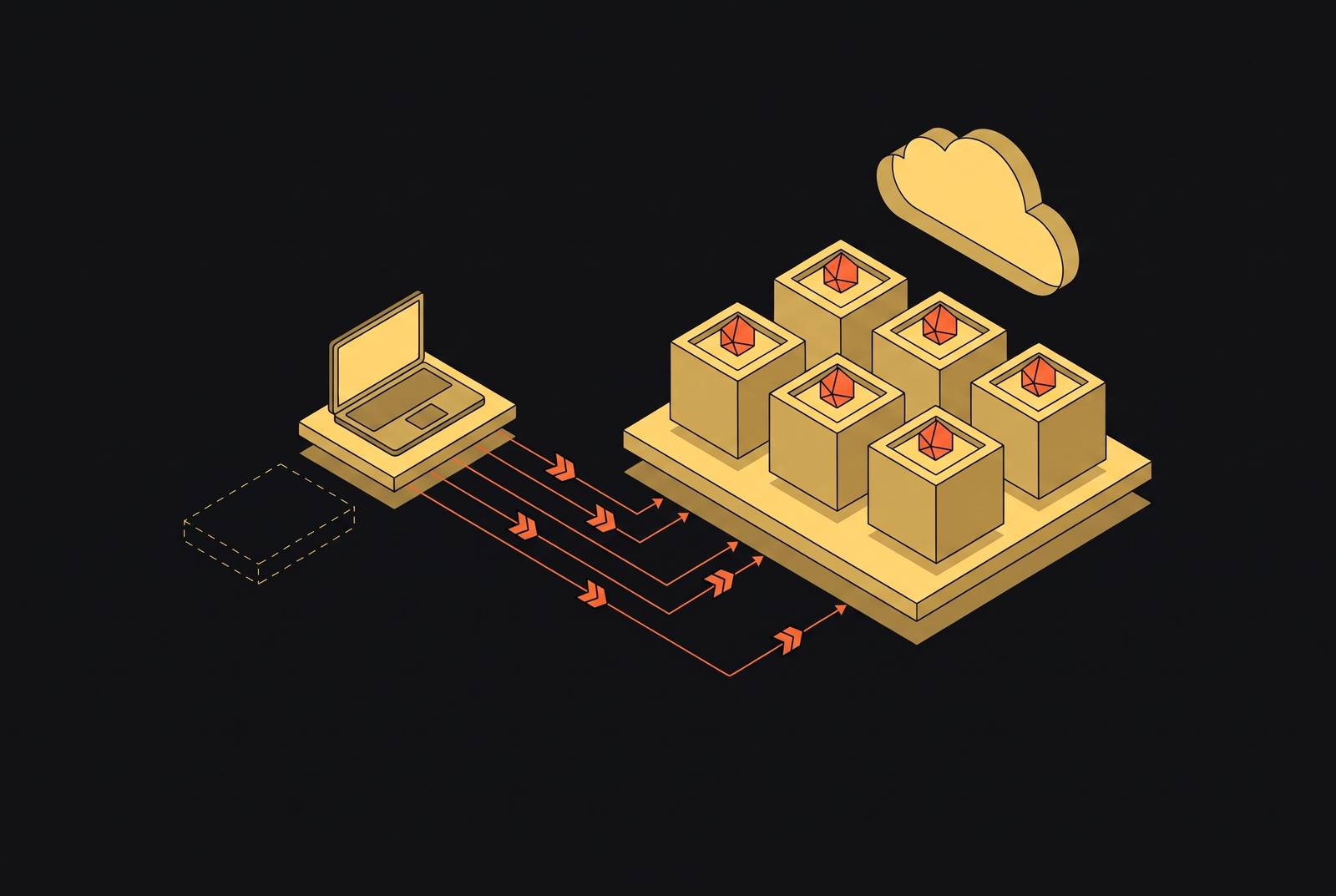
Dispatching Claude Code or Codex to managed cloud VMs moves provisioning, isolation, process lifetime and credential handling from the team to the platform, leaving engineers to specify work and review the result. Native cloud dispatch provides this without a runtime the team operates. For buyers seeking a bring-your-own API key cloud coding agent runner, managed execution and support for their own Anthropic or OpenAI API key are separate requirements to verify.
Why running Claude Code or Codex on your own compute creates a hidden operational tax
A local coding-agent session depends on the machine hosting it. When the laptop sleeps, the session dies. While the agent runs, it competes with the developer for ports, databases and memory, so delegated work still occupies the environment needed for other tasks. Personal credentials also sit in the same environment as agent permissions. The developer’s workstation becomes both a place to work and an execution environment to maintain.
That responsibility extends well beyond the initial installation. The team must keep up with every update cycle, credential rotation and decision about how long an agent runs for as long as it owns the process. Moving the process to compute the team runs puts it somewhere else, but leaves the team with the same duties. Someone still owns the runtime and its upkeep. The hidden tax is therefore not simply setup time, but the continuing operational work attached to each task the agent performs.
What a managed VM actually absorbs when you dispatch Claude Code or Codex
A managed VM is more than remote compute. It is an execution system that owns provisioning, isolation, process lifetime and credential handling on the team’s behalf. The engineer delegates a task. The output is a pushed branch with a reviewable diff. This distinction separates managed dispatch from merely installing an agent on a remote machine.
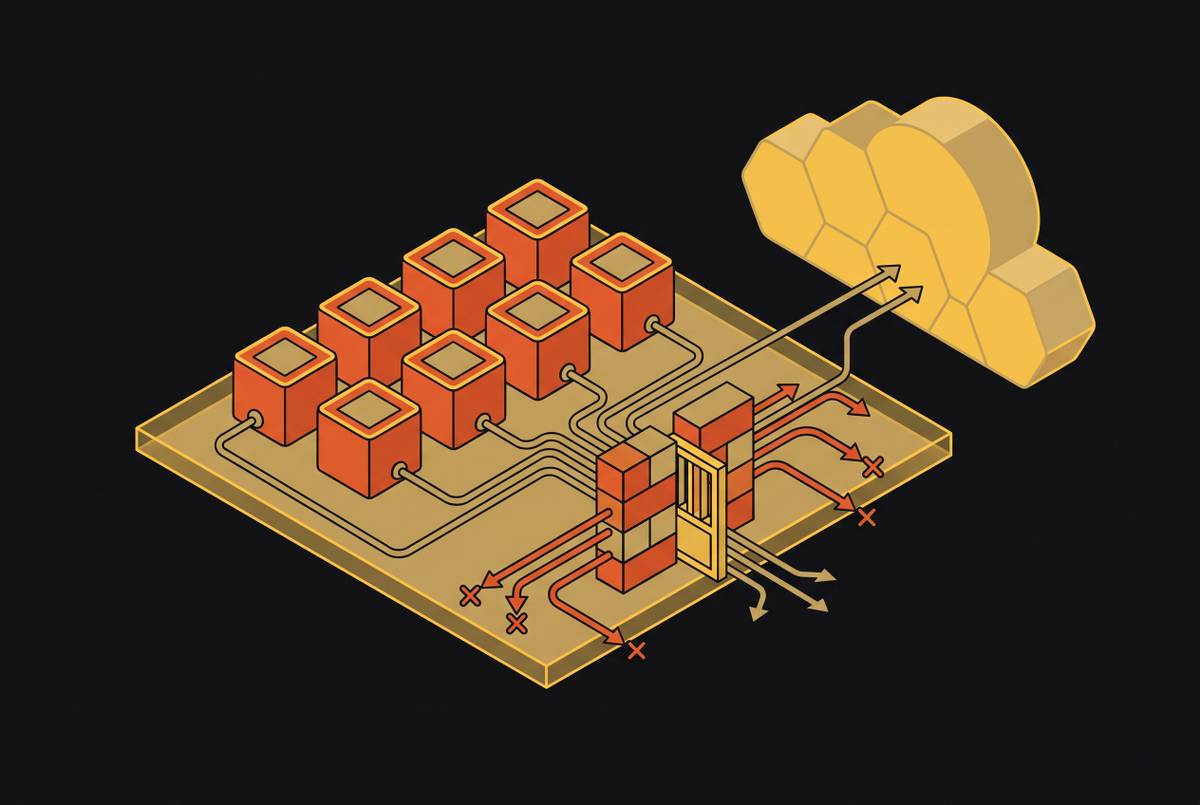
Anthropic’s native cloud sessions split the work this way. Each session gets a fresh Ubuntu 24.04 VM with common language toolchains, Docker, PostgreSQL 16 and Redis 7 already present. The platform clones the repository at the specified branch without the team provisioning storage or configuring Git access. Network access is set per environment for package registries, GitHub and other allowlisted domains, with nothing else allowed by default. The team chooses how much access to allow without having to write firewall rules.
Credentials stay outside the VM and do not enter the execution environment directly. A proxy handles them outside the session. The session also persists after the engineer closes the browser tab or laptop, removing the need to maintain process supervisors or tmux sessions. There is no separate VM charge, although the work counts against the plan’s usage limits.
The setup script and environment configuration belong in the repository. That gives the managed layer the inputs needed to reproduce the environment across sessions and team members. The team still defines what the task needs. The platform runs the compute from dispatch through delivery, and the browser shows a diff where engineers can add inline comments and create a pull request.
How Claude Code cloud dispatch works across the three entry points
Claude Code exposes the same managed execution layer through the browser, terminal and mobile app. In the browser, the engineer connects GitHub, selects a repository and environment, and describes the task. Claude clones the repository into an isolated VM, runs the setup script, performs the work, runs tests and pushes a branch. The engineer can then review individual lines or open a pull request. The session stays open for further instructions after the branch is pushed.
Engineers can dispatch from the browser without a local checkout. That makes repository access, rather than the state of a developer’s laptop, the starting point for delegation. On Team and Enterprise, an organization Owner or Primary Owner must enable the GitHub connector before members can use it. The optional Quick Setup toggle enables onboarding automation for new members.
Engineers can dispatch tasks from the terminal as part of the command-line workflow they already use. The command is now claude --cloud, but the deprecated --remote flag still works. With a GitHub remote, the VM clones the GitHub state of the current branch, so local commits must be pushed first. If there is no such remote, Claude Code uploads a local bundle instead. This distinction determines which version of the work reaches the cloud session.
The return path is claude --teleport, which brings a running cloud session into the local terminal. Claude checks the repository, fetches the branch and loads the conversation history, and the working directory must be clean. A task started on a laptop can be reviewed from a phone because session state belongs to the managed execution environment.
User-level skills, MCP servers and settings that are not committed to the repository do not enter cloud sessions. The practical requirement is to commit what the agent needs to .claude/ and .mcp.json. Otherwise, the cloud environment is missing configuration that may have guided how the agent worked locally.
Scheduled tasks, formerly called “routines,” run as cloud sessions. Once the Claude GitHub App is installed, an automated fix feature can respond automatically to CI failures and review comments on pull requests.
How Codex cloud dispatch works and where it differs structurally from Claude Code
Codex cloud is OpenAI’s hosted execution layer. The engineer submits a task and receives a diff that can become a pull request, while the platform absorbs the intervening compute. Its architecture differs in network policy, environment preparation and dispatch surfaces.
OpenAI’s Codex security documentation describes an agent phase that runs offline by default, with network access configurable per environment. Codex clones the repository at task submission, makes changes and runs tests inside the sandbox. The GitHub pull request is created after the task runs, and the push needs outbound network access.
This default has a practical tradeoff for task design. External package registries and APIs are unavailable during execution unless access is configured. Tasks must therefore be self-contained or the environment must be pre-seeded with what they require. Stricter isolation suits security-sensitive work, but preparation becomes more consequential when the agent cannot fetch a missing dependency during the task.
Codex’s reusable environments address that preparation separately from execution. Relaunched at DevDay on September 29, 2026, Codex lets teams publish a prepared environment once. Each task after that starts from that filesystem in its own isolated workspace, so it takes less time to set up. This differs from the fresh-VM-and-setup-script model described for Claude Code.
Codex accepts tasks from the web, the ChatGPT app, an IDE or the CLI, a broader set of surfaces than Claude Code cloud at launch. Its /agents view supports delegating and tracking simultaneous tasks. Choosing between these paths involves both the security boundary around execution and the workflow through which engineers initiate and follow the work.
What dedicated managed platforms add on top of the native dispatch paths
Native dispatch already absorbs compute and isolation, and it includes some automation and coordination. Claude Code has scheduled tasks and an automated fix feature, while Codex has its /agents view. Dedicated managed platforms extend that boundary further. Their role is to take on orchestration, parallelism, post-PR automation and cross-agent flexibility that would otherwise remain with the team.
Teams looking for a bring-your-own API key cloud coding agent runner have more to check before buying a platform that takes on this much work. Support for managed VMs does not by itself establish support for the team’s own Anthropic or OpenAI API key. Support for one agent also does not mean the platform offers cross-agent flexibility. The relevant criteria are which agents and keys the platform accepts, which workflow responsibilities it owns, and how those responsibilities differ from native dispatch.
Dedicated platforms take work to set up and come with a separate bill, while teams already on the agent provider’s plan can use native dispatch without that extra platform setup. The distinction is how much of the workflow beyond execution the team wants the platform to own.
How parallel dispatch changes what a team can ship, and what it costs in review overhead
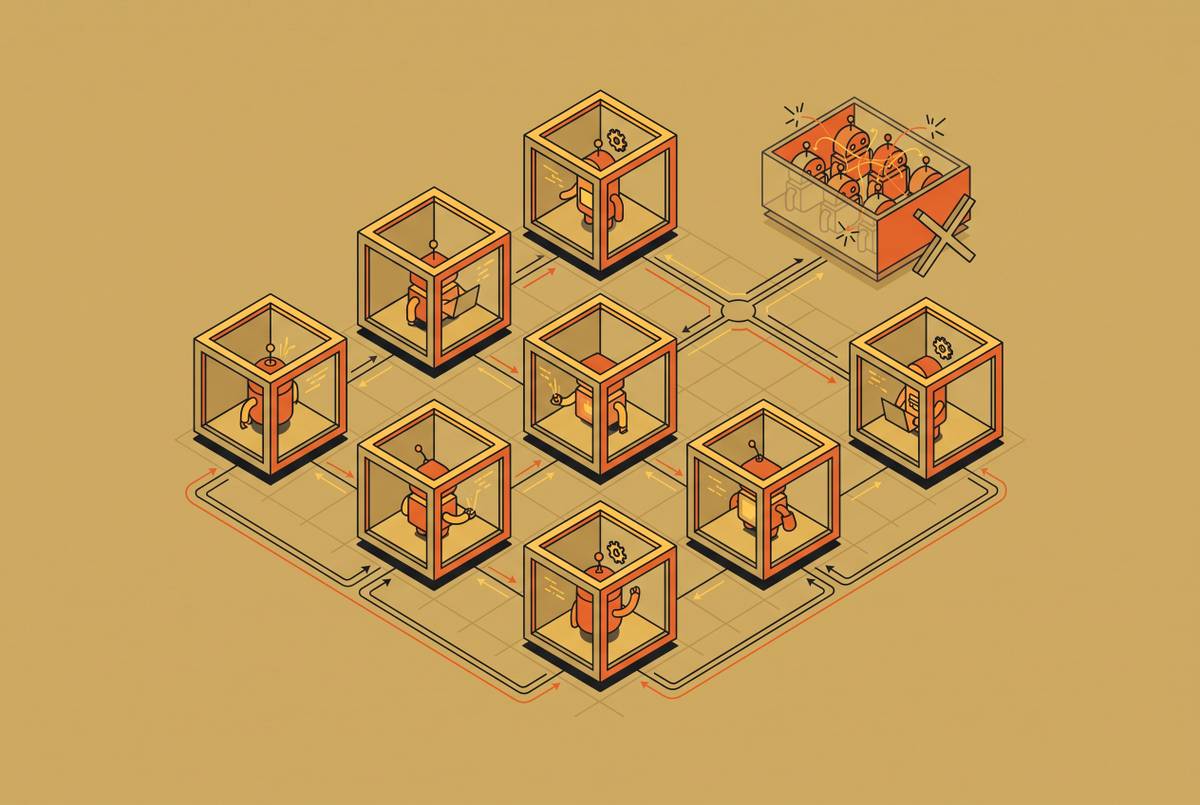
The strongest case for managed agents is throughput across independent tasks. An engineer can submit several well-defined requests, continue other work and review multiple diffs later. Each task runs in its own VM and branch. Claude Code’s cloud documentation names parallel tasks as a main use case, and the team does not have to manage multiple worktrees. Separate execution environments also get rid of the port conflicts that come from sharing one workstation.
Review work grows with that output, however. AI-assisted pull requests tend to be larger than unassisted ones, and reviewers take much longer to pick them up. The managed VM absorbs execution, but it cannot decide whether a proposed change is safe to merge.
The workflow therefore shifts toward specifying and reviewing code. Teams that plan for this shift can use agent-first review to triage changes before human review, as Vellum did. Human review still has a distinct role. Triage can precede it, but the final assessment of the proposed change remains a separate responsibility. Without that workflow adjustment, review becomes the new bottleneck.
With event-driven work, parallel dispatch can handle more than the requests an engineer adds to a queue. A production alert can trigger an agent to investigate the root cause, propose a fix, run regression tests and surface findings in the same Slack thread. That workflow requires managed VMs with event triggers. Even when an investigation starts on its own, the team still needs to review its findings and changes.
What to verify before trusting a managed VM with production credentials and real repositories
Delegating execution introduces a new trust boundary around repository access, credentials and the agent’s working environment. The first verification is whether secrets enter the VM. Claude Code cloud uses a credential proxy that keeps secrets outside the VM and attaches them after requests leave the session. That is a specific architecture that managed compute platforms may use. Teams should confirm the credential path for any platform described as “managed.
The second verification is what the agent can reach. Codex’s network-isolated agent phase is stricter by default, but tasks must be self-contained or run in pre-seeded environments. An offline agent phase and a later network-enabled push are different access conditions, so the platform’s network policy needs to be understood across both.
Third, teams should check where code runs, including the options for self-hosting and bring-your-own-cloud. Managed operation alone does not answer that question. For regulated industries, teams should also check HIPAA BAA availability explicitly, because not every platform offering managed VMs provides one. Deployment location and contractual coverage are separate requirements from the convenience of handing off a task.
The fourth verification is whether the output supports substantive human review. The unit of work should be a pushed branch and a reviewable pull request with a diff, inline comments and the ability for a human to merge or reject it. Reviewer engagement has the strongest correlation with successful agent PR integration. A review surface is necessary, but someone must actually use it. The platform takes responsibility for running the agent, while the team retains judgment over what enters the repository.